Measuring for a New Garage Door
The following page provides general details and an introduction to measuring for a new garage door. If you already know the specific door type you want, jump straight to our tailored, step-by-step measuring guides below:
General Measuring Advice
Measuring for a new or replacement garage door should be relatively easy, but because different door types require different ordering measurements, you need to understand how the terminology works. This guide provides a general overview. Always check the specific guide for your chosen door type before ordering.
The Core Measurements You Need:
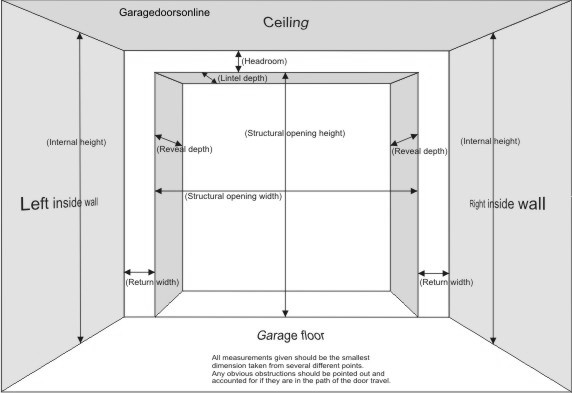
- The Structural Opening (Width and Height): Imagine there is absolutely nothing fitted yet. Measure the actual clear daylight opening of the bare brickwork aperture. Take the smallest measurements if fitting strictly in-between the aperture, and the largest measurements if installing behind the aperture.
- The Headroom: The vertical space above the supporting lintel inside the garage (measured from the bottom of the lintel up to the lowest ceiling obstruction).
- The Reveals: The depth (front to back) of the brick piers either side of the opening. (If your garage is built against your house wall, one side probably won't have a pier).
- The Returns: The internal width space available on either side of the aperture when standing inside looking out. Again, look out for adjoining walls.
- Obstructions: Always note obstacles like gas/electric meters, internal pedestrian doors opening inwards, or low-hanging strip lights. These will heavily dictate which door type you can actually fit!
Crucial: Understanding Installation Tolerances
We do not deduct any tolerances from the dimensions you provide when ordering. You must allow for your own installation tolerances, especially when fitting a door in-between brickwork.
You cannot order a 2250mm wide door and frame for a 2250mm wide opening—it simply won't fit into the tight space. The general rule of thumb is to take 10mm off the total width and height. For example, for a 2250mm opening, order a 2240mm (or 2230mm) Overall Width door and frame.
ALWAYS measure your opening width in at least 3 places (top, middle, bottom) and height in 3 places (left, middle, right). Always use the smallest dimension found to calculate your final size.
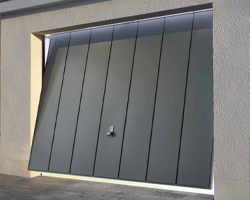
Up and Over Garage Doors
Up and Over garage door measurements depend entirely on whether the door is being fitted in-between or behind the opening, and whether you are keeping an existing timber sub-frame.
This door type always requires a fixing sub-frame. In the UK, these doors are ordered by their internal frame dimensions (the daylight opening of the sub-frame). Therefore, you must take the extra thickness of the frame legs and head into account if ordering a door complete with a new steel sub-frame.
You should primarily concern yourself with the Overall Door and Sub-Frame measurements, as frame thicknesses vary slightly from one manufacturer to another.
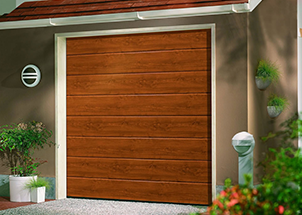
Sectional Overhead Garage Doors
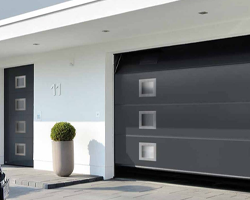
Sectional Doors are typically ordered by the internal fixing frame opening dimensions (often referred to as the 'daylight opening'). These doors are supplied complete with a steel framework that installs directly to the brickwork.
They are usually installed behind the opening (inside the garage), which completely hides the steel frame and maximises your drive-through width. They require a larger amount of tracking space as the door slides back across the garage ceiling (usually the height of the door, plus at least 350mm-750mm).
Because they fit behind the brickwork and rise vertically without swinging outwards, it is entirely possible to use a slightly smaller or larger "standard" size door behind a non-standard opening, which can save you money compared to a bespoke build.
If your sizes are critical to the millimeter, we highly suggest checking with us for the exact overall dimensions before ordering, or let us provide a technical drawing for you.
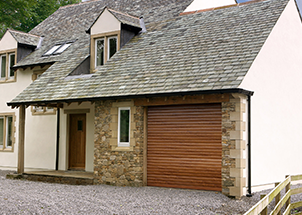
Roller Shutter Garage Doors
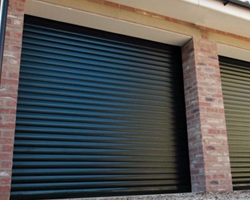
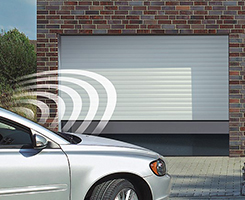
Roller Shutter Doors are ordered by different dimensions depending entirely on the brand. Some manufacturers require the width in-between the guides, while others require the Overall Width including the guides. Since most roller doors are strictly made-to-measure, you must take extra care here.
It is generally best to install the tracks and curtain roll completely behind the opening to maximise drive-through width and hide the mechanics. Modern insulated roller doors fit directly to the brickwork without a sub-frame.
Here is a quick overview of how different roller brands dictate their ordering dimensions:
- Ordered by Overall Width (including guides) and Guide Height (excluding roll box): SeceuroGlide (Standard, Compact, LT), Gliderol Roll-A-Glide, GDO Roll77/Roll55, Samson SupaRolla.
- Ordered by Opening Width (in-between guides) and Guide Height (excluding roll box): Hormann Rollmatic, Garador GaraRoll.
- Ordered by Opening Width (in-between guides + curtain overlap) and Guide Height: Gliderol Continuous Curtain Steel Doors.
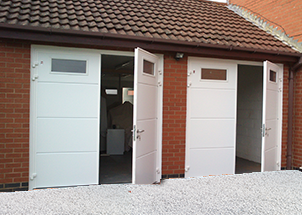
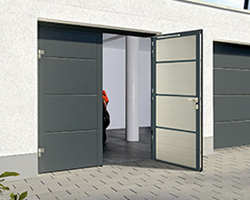
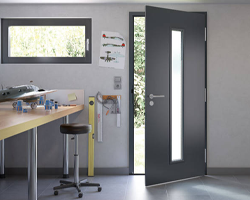
Side Hinged Doors
Because Side Hinged Doors are almost always installed strictly in-between the opening, the most critical dimensions are the Overall Door Panel and Sub-Frame Size combined.
It is highly recommended to order using the Overall Width and Height measurements, ensuring you have deducted your fitting tolerances. Modern, insulated double-skinned steel side hinged doors are always supplied with the sub-frame, hinges, and locking mechanisms factory-fitted as one complete "doorset".
If your brickwork is severely out of square, timber side hinged doors with a timber framework are often the most versatile option for scribing and adjusting on-site.
Visual Garage Door Terminology
To recap the basic terminology used when measuring and discussing a garage aperture:
- The Structural Opening (width and height) is crucial when fitting a door and sub-frame in-between the brickwork.
- Headroom is vital for sectional and roller doors because their mechanisms encroach into this ceiling area.
- The Reveal depth is important when installing in-between the aperture to ensure the frame doesn't stick out.
- The Return width is essential when installing behind the aperture to ensure the frame legs are hidden by the brick piers.
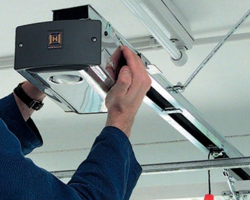
- For any garage door with ceiling tracking (Sectional or Up and Over), the internal ground-to-ceiling height must be free of major obstructions to allow the tracks and electric motor boom to run smoothly.
Many of the most up-to-date size tables are available in the PDF Downloads section. For specific instructions, visit your required guide below: